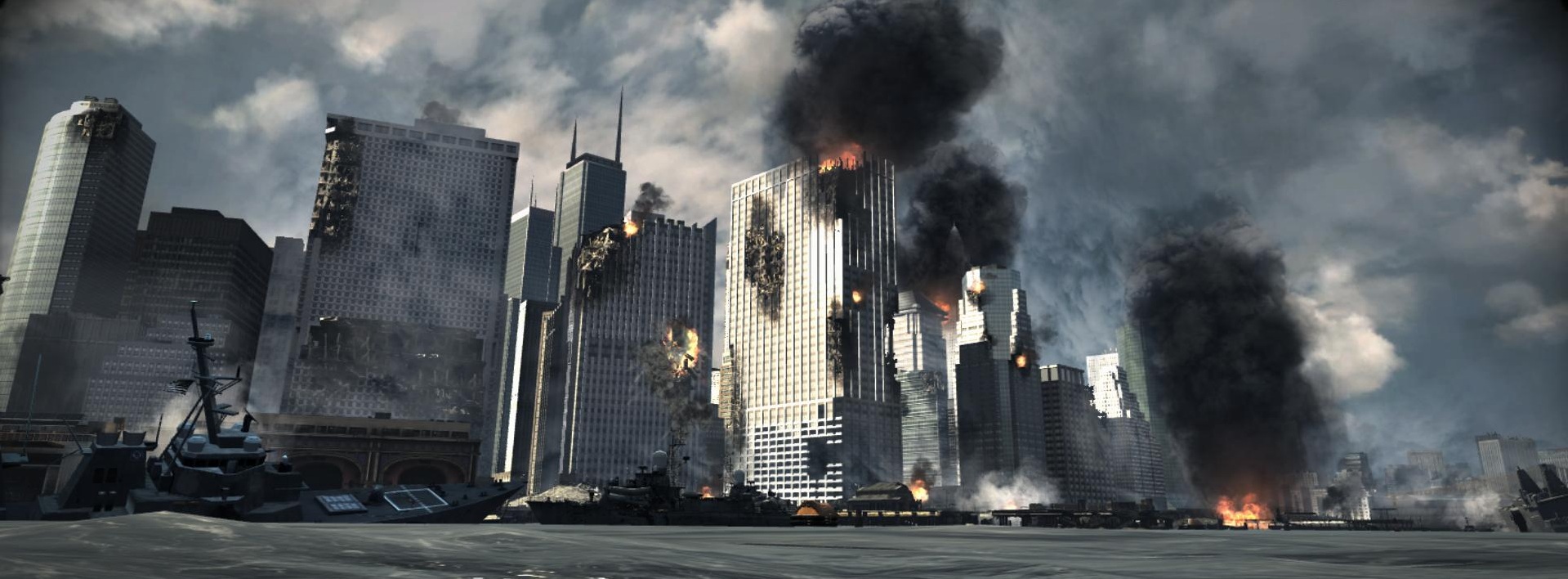
The posterboy for video games, whether we like it or not.
I remember a time, back in the 90s, where the only phrases synonymous with video games to the non-gaming public were Super Mario Brothers and Sonic the Hedgehog. But what a shift it is to look at an example from today, a world where Call of Duty permeates any discussion about video games, to the point where a lot of people don't really think of anything else.
Should this medium of ours be represented solely by Call of Duty?
I don't have a problem with the Call of Duty games, per se. It's not a series that I particularly like, but I can respect those that do enjoy it and the thrills that it offers. I don't have a problem with its astounding success, as its a fantastic example of our medium gaining a significant foothold in the world of entertainment.
What does concern me is what I mentioned above: that the Call of Duty series has become, for a lot of people, the quintessential definition of what a video game is. I was travelling home late one night, and the cab driver had the radio set to WSFM, a Sydney metropolitan station dedicated to classic music from the 60s, 70s, and so on. This particular station's demographic consists of people within the 40 to 60 age group; parents, early retirees, and those within the 'baby boomer' time period. I happened to only be listening off-handedly, but was incredibly surprised when the announcer started discussing Modern Warfare 3. This wasn't a simple discussion either, designed to give those parents a bit of info about a game their children might want: the announcer was discussing the role of dedicated servers in the game, and how they were unranked, amongst other in-depth points.
Call of Duty's penetration in non-gaming world is certainly impressive, but is it really the only association that video games should have at the moment? Should this medium of ours, one filled with a deep, rich catalogue of varied titles, be represented solely by Call of Duty? A game that, for all intents and purposes, is a fairly violent and at times, controversial look at issues of human warfare and welfare?
Unfortunately, the validity of video gaming is still only measured in financial returns and social controversy.
To make a fairly basic analogue for a moment, imagine if the film industry was represented solely by Transformers 2. The film may have merits in what it sets out to achieve, but to have it be the only film people think of when they think of film in general is a terrible thought. Granted, this particular issue can be attributed to the relative maturity of the video game medium in comparison to any other form of media: film has had over a century to establish itself, and has a far larger library of titles. It also has less barriers of entry for an audience to not only enjoy, but to actively contribute and participate in: put simply, anyone could procure a camera and craft a film, an ease that doesn't have a parallel in the gaming world.
It's these differences that suggest that the road ahead for our medium is still fairly contentious. Unfortunately, the validity of video gaming is still only measured in financial returns and social controversy, both of which are aptly demonstrated by the Call of Duty series (and negatively spun by a large proportion of the traditional journalistic media). For now, all we can do is educate and be open, and time will take care of the rest.

Rage
Tell us who deserves the Shine Get or simply comment away. Or both.